A quiet luxury label for the confident Indian woman
"India , at the centre . The World , within reach"

Where it began
Before ROJIA, there was a merchant navy officer, moving between ports — Cape Town, New York, London, Tallinn — for months at a stretch. What he noticed most, on land, was clothing: the fall of a linen shirt, the quiet weight of well-finished cotton, the confidence of pieces built to last rather than trend. He assumed, like most people would, that these clothes were made where he found them.

The Realization
A friend, seeing something he'd picked up abroad, said it plainly — that it hadn't come from where he thought. Piece after piece, it turned out, had been cut and stitched in India, sometimes streets from workshops he already knew. The work was Indian. The confidence around it wasn't. Why did it feel premium in Cape Town or London, and ordinary at home? What would it take for it to feel the same way here?

Why ROJIA exists
ROJIA began as an answer. Natural fabrics, cut into silhouettes meant for a woman who already knows what she wants to wear and how she wants to feel in it — no borrowed language, no inflated claims, just honest construction, made in India, for India first. It is built by two people with very different working days. One spent years reading ports and cargo manifests. The other spends hers in an operating theatre. Between rounds, deadlines, and raising a daughter together, they built a small clothing label around one idea. Indian craftsmanship doesn't need to travel abroad to be seen clearly.

On craft
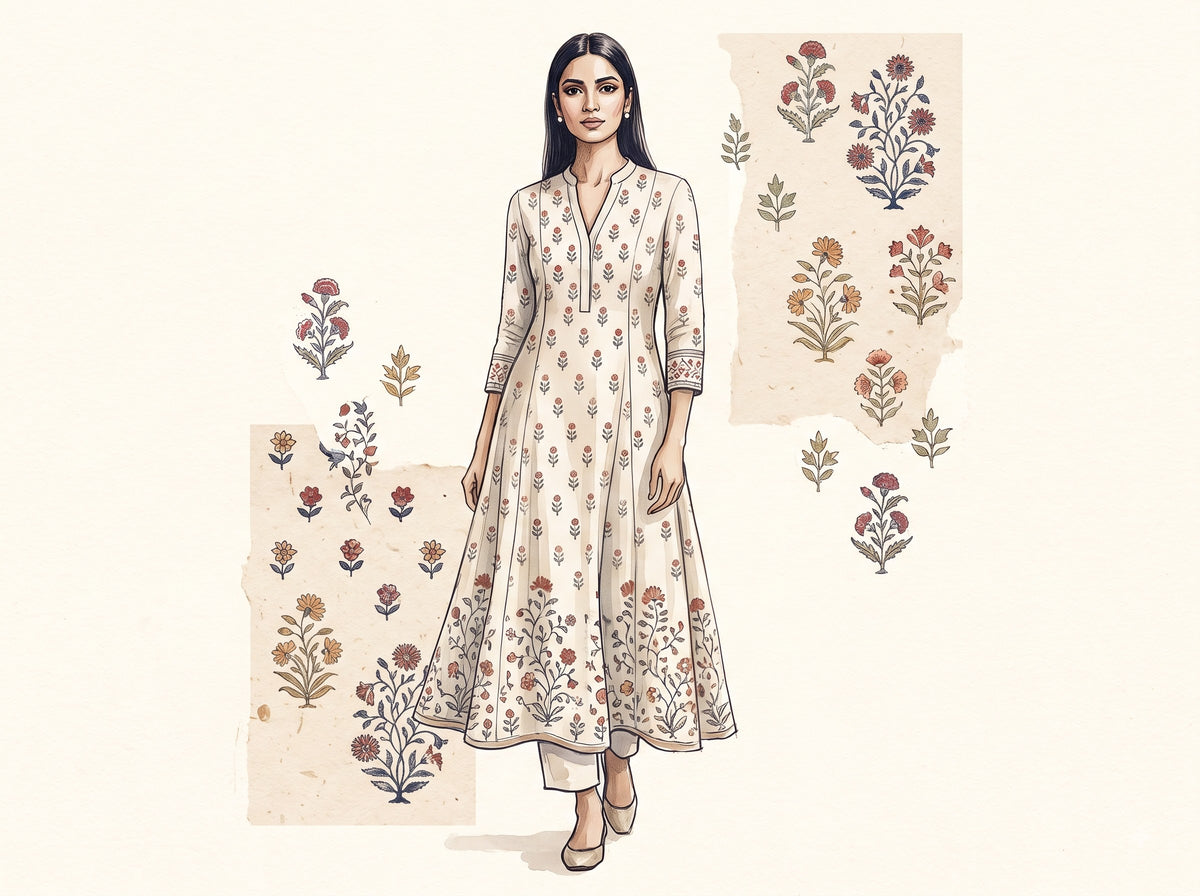
Every piece begins with people, not machines — hand block printing in the Sanganeri tradition, fabric checked before it's cut, stitching inspected before anything is packed. None of this is unusual in India. It has simply, for a long time, been reserved for export.

What stays with you
There is nothing wrong with admiring craftsmanship from elsewhere. But there is something quietly right about recognising it at home — worn without explanation, without an imported label standing in for its value.
PREMUIM BEGINS WITH FABRICS
SHE KNOWS HER WORTH
" So Should her Clothes "